

School Allergy Safety and Benedict's Law


School Allergy Safety: Keeping Your Child Safe in the New School Year
The first weeks of a new school year can feel particularly anxious for parents of a child with a food allergy. New classroom, new staff, new routines. Does the teaching assistant who started this term know what a reaction looks like?
This year, some of those answers are different. For the first time, schools in England are working to a national standard on allergy safety, set out in statutory guidance published by the Department for Education in July 2026. The measures are known as Benedict's Law, after Benedict Blythe, a five-year-old who died from anaphylaxis at his school in December 2021. It is a meaningful shift, but not a reason to entirely hand over responsibility: it raises the bar for every school, but your child's safety still depends on the plan you build with them.
In a nutshell: what has changed in school allergy safety
- Schools in England are expected to have a published whole-school allergy policy, reviewed at least annually.
- All staff on site when pupils are, not just teachers, should have annual allergy awareness and emergency response training.
- Schools should hold spare adrenaline auto-injectors, kept unlocked and reachable within five minutes.
- Children with allergies should have an Individual Healthcare Plan agreed with parents, in addition to their clinical action plan.
- It applies to state schools in England only; equivalent rules for independent schools are planned.
Why the rules changed: Benedict's story
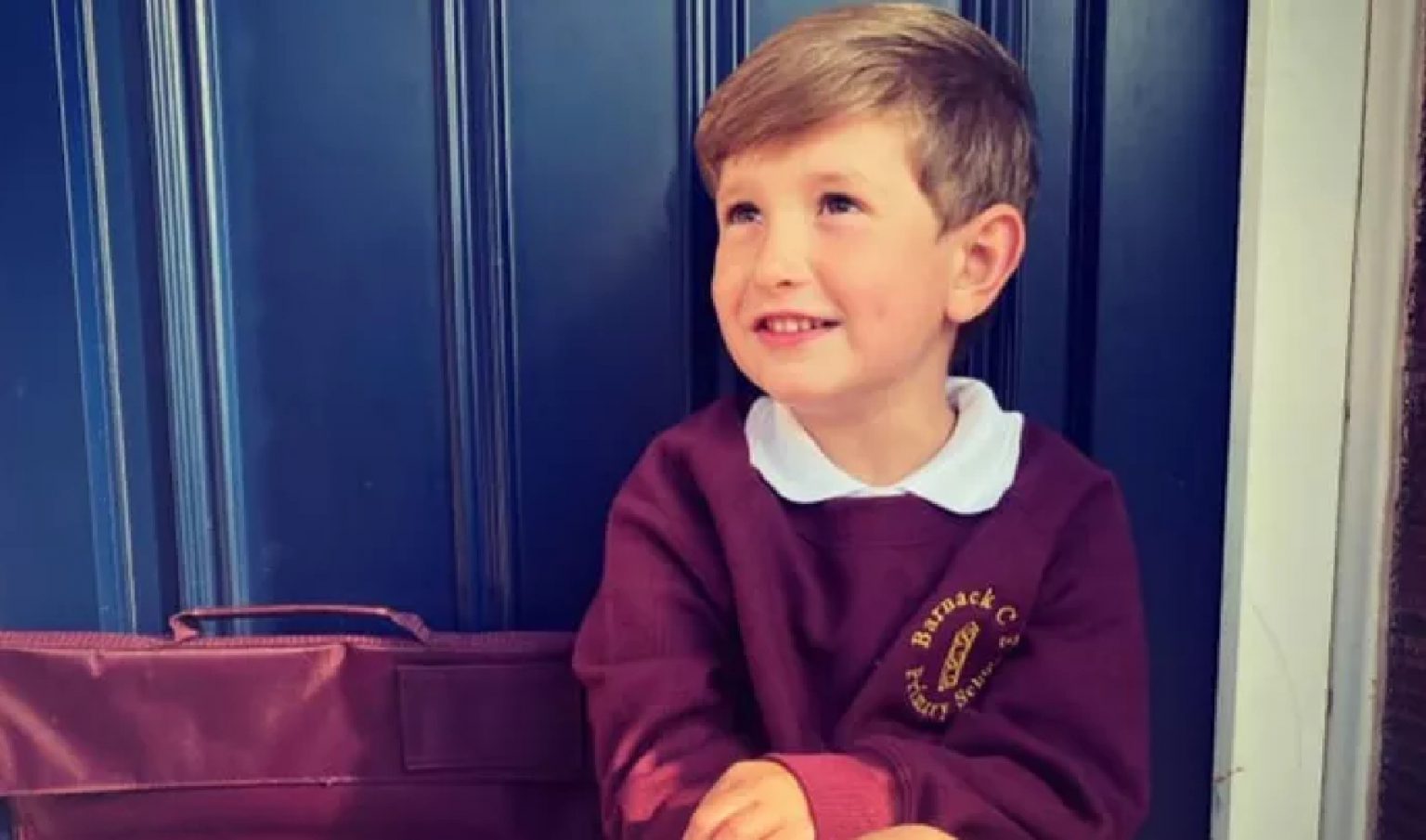
Benedict Blythe was five years old and in his first term of Year 1, when he died on 1 December 2021 after collapsing at his primary school. He had severe asthma and known allergies including cow's milk, egg, nuts and kiwi.
His inquest concluded in July 2025. The jury found he died of anaphylaxis caused by accidental exposure to cow's milk protein, most probably from his own drink at break time, and identified contributing failures rather than a single mistake. This included a delay in giving adrenaline; an allergy plan not shared with all the teaching staff around him; scope for a mix-up of milks, and the missed opportunity of not learning from a prior incident, when he reacted to a pizza at school. His mother, Helen Blythe, said his death "was preventable and was caused by a cascade of failures - individual, institutional and systemic".
At the time, no legislation in England required any school to have an allergy policy. The campaign to change that became Benedict's Law.
What the new guidance requires
The Department for Education published Allergy safety in schools on 6 July 2026. Things that matter to parents include:
An allergy safety policy, separate from the school's medical conditions policy, published on its website. This is reviewed at least annually and ideally after any serious incident or near miss. You can now read your school's approach before you meet anyone.
Annual training for all staff, not only those responsible for a particular child. It should cover everyone present when pupils are on site, including supply staff, regular volunteers, catering staff and after-school club staff.
Spare adrenaline auto-injectors on site, for any child or adult having an anaphylactic reaction, and not only those with a known diagnosis. Up to 20% of anaphylaxis reactions in schools happen in children with no pre-existing diagnosis. Spares "must be readily accessible and not locked away", positioned so a pair can reach the person within five minutes.
Individual Healthcare Plans for children needing specific arrangements, developed with parents and the child. This is a separate document from the clinical allergy action plan from their healthcare provider, which should be attached to the Individual Healthcare Plan. Schools should also record serious incidents and near misses and report them to parents and the governing body.
Inclusion policies ensure children with allergies are fully included in every aspect of school life without being isolated or unfairly penalised. At mealtimes, there will be no social segregation with separate "allergy tables", whilst identification policies are designed to prevent food mix-ups. Families can meet with catering staff and discuss reasonable menu adjustments so that allergic pupils can safely access school meals. Children should be included in trips, extracurriculars, and standard lunchtimes, without needing parents to supervise their child or give medication.
Benedict's Law has also reached the statute book, in the Children's Wellbeing and Schools Act 2026. Parts of that Act are still due to be implemented, so initially, the statutory guidance is the practical benchmark.
Which schools this covers
The guidance applies to maintained schools including special schools, pupil referral units, and academies including free schools and alternative provision academies, in England only. Maintained nursery schools and 16-19 academies sit outside its scope.
Independent and non-maintained special schools are not initially covered, though the Government intends to introduce equivalent requirements through the relevant regulatory standards. If your child’s school is not currently covered, the guidance is still the recognised national benchmark, and it is reasonable to ask your school to meet it voluntarily.
What this does not change
Your child still needs their own prescribed, in-date allergy medications, including antihistamines and adrenaline devices at school. MHRA advice is that people at risk of anaphylaxis are prescribed two devices and carry them at all times, because a second dose is sometimes needed. The school's spares are a safety net, not a substitute.
Whilst schools should stock emergency "spare" adrenaline on site, current regulations only allow schools to purchase injectable adrenaline devices (such as EpiPens) as spare emergency stock. Thus while your child may be prescribed a needle-free (eg. Nasal EURneffy) adrenaline device by your healthcare provider, schools cannot currently stock nasal adrenaline as spares. If your child experiences anaphylaxis and their personal device is unavailable, staff may administer a spare injectable adrenaline device in an emergency.
Your child still needs a current allergy action plan (AAP), a clinical document completed by their health professional. It is not the same as the school's Individual Healthcare Plan (IHP), which describes how the individual school, college or setting will respond to the information and advice they have received about the child or young person’s medical condition or allergy- the allergy action plan (AAP) should be attached to the Individual Healthcare Plan (IHP). Your child needs both these documents.

What to check in the first weeks of term
Read the school's allergy policy. It should be on the website, so ask if you cannot find it. Anaphylaxis UK and Allergy UK both publish model policies and guides that a school can adopt, and which you can share with the school, if it does not already have one.
Check all your child’s allergy medications, including adrenaline devices. Confirm expiry dates and replace anything expiring this term, check with your healthcare provider that your child has the correct dose of allergy medications (including adrenaline devices and antihistamines) for their age and/or weight, and make sure the school has two in-date adrenaline devices labelled with your child's name.
Ask for an Individual Healthcare Plan meeting, and bring along your child's allergy action plan.
Ask who is responsible, and whether the new staff around your child have been trained yet.
Cover the breaks from routine: Parents tend to worry about the lunch hall, but a review of school reactions showed that many occur in the classroom, often during special-occasion activities, when normal procedure was set aside, when there are interruptions to routine, and when food is brought in by teachers and pupils. Check birthday treats, parties, cooking and science lessons, clubs and trips. This is where normal procedure can lapse.
Support your child's own confidence by helping them learn how to speak up about their allergies, rehearse telling an adult straight away if they feel unwell, and never accepting or swapping food. The guidance expects schools to help children understand their allergy and, over time, manage it themselves.
Looking ahead
Benedict's Law does not make school entirely risk free. What it does is level the playing field. Until this year, whether a school had a policy, trained staff or accessible adrenaline was more variable. What Benedict’s Law cannot do is guarantee that your school has everything in place yet, so it is worth checking rather than assuming this is the case.
Frequently asked questions
What is Benedict's Law, and when does it apply?
Benedict's Law is the name given to a set of national allergy safety protections for schools in England, campaigned for by the family of Benedict Blythe, a five-year-old who died of anaphylaxis at school in 2021. It covers a published allergy policy, annual staff training, spare adrenaline auto-injectors and Individual Healthcare Plans. The Department for Education published its statutory guidance on 6 July 2026, with the requirements coming into force in September 2026.
Does my child still need their own adrenaline devices at school?
Yes. Schools are now expected to hold spare adrenaline autoinjector devices, but these are an emergency backup for anyone on site. MHRA advice is that people at risk of anaphylaxis have two of their own prescribed, in-date devices at all times, alongside their allergy action plan.
Does Benedict's Law apply to private schools?
Not yet. The guidance initially applies to maintained schools, academies, free schools and pupil referral units in England. The Government has said it intends to introduce equivalent requirements for independent and non-maintained special schools, but these are not yet in force. Parents at independent schools can reasonably ask their school to follow it voluntarily.
Concerned about your child's allergy plan for the new school year?
A plan that worked in Reception may not be right for Year 4, or for the move to secondary school. Whether you need a diagnosis confirmed, an action plan updated, or advice on working with your child's school, our specialist team is here to help.
Concerned your child is affected by allergies?


